A1-12 · Describe objects after sein
Colours and shapes
Describe furniture by colour, size and shape using adjectives after ist and sind.
About 5 minutes to read · 12 quiz questions
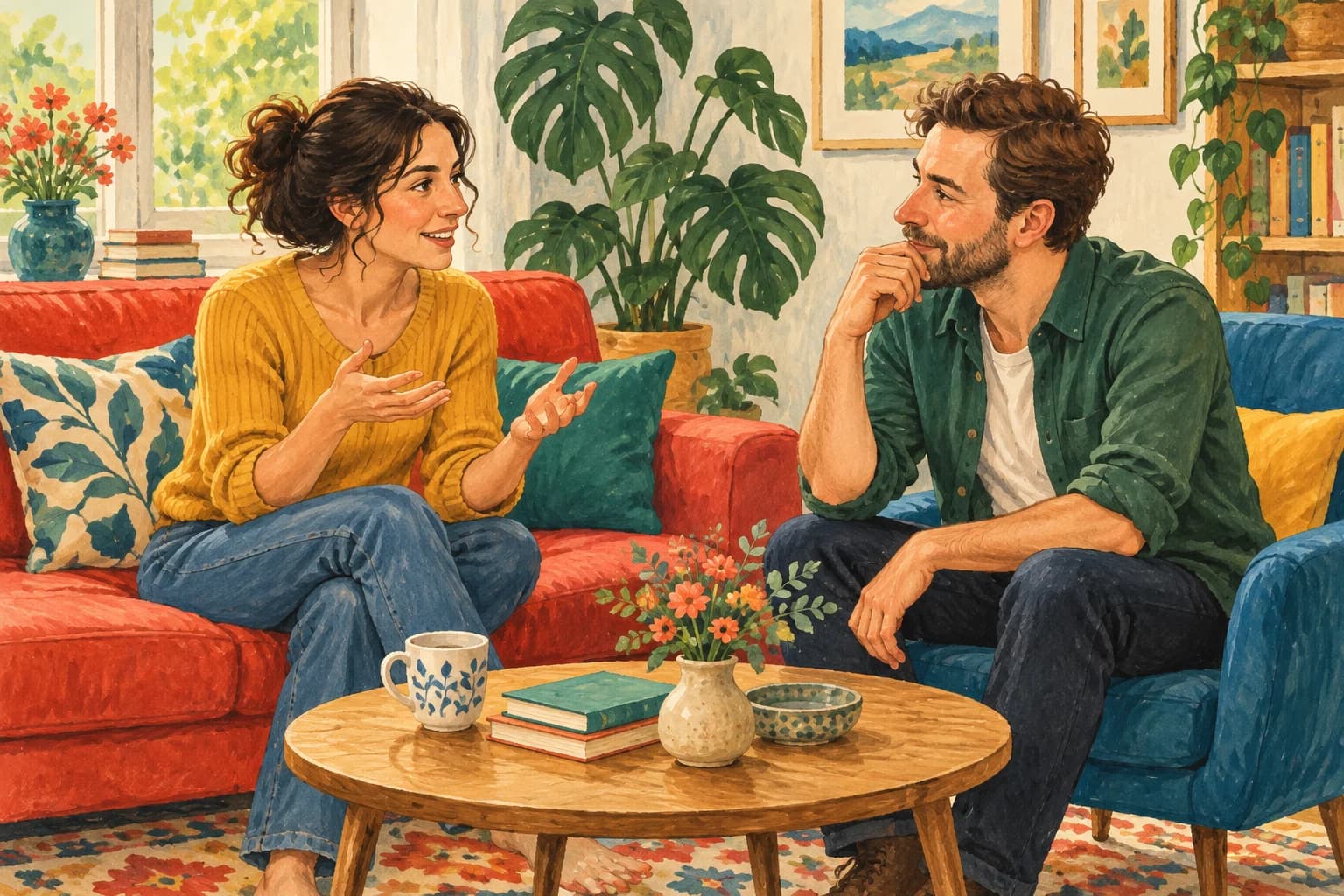
01
Name a colour
An adjective after sein describes a person or thing. In this position it has no ending added for gender. Compare der Stuhl, die Lampe and das Sofa.
Der Stuhl ist blau.
The chair is blue.
Die Lampe ist gelb.
The lamp is yellow.
Das Sofa ist rot.
The sofa is red.
Die Pflanze ist grün.
The plant is green.
After ist, use the plain adjective: blau, gelb, rot, grün. Do not copy the noun article into an adjective ending. Adjectives before nouns follow a different pattern taught later.
02
Size and shape
Groß and klein describe size. Rund means round; eckig means angular. A square object can be called quadratisch. These examples still put the adjective after ist.
Der Tisch ist rund.
The table is round.
Das Kissen ist quadratisch.
The cushion is square.
Der Schrank ist groß.
The cupboard is big.
Das Zimmer ist klein.
The room is small.
The endings stay the same after sein: der Tisch ist rund, das Kissen ist quadratisch. Groß uses ß. Klein means small, not short in every possible context.
03
Ask and correct
A yes/no question can check a description. Use nicht to negate an adjective. This differs from kein before a noun in the furniture chapter.
Ist das Sofa blau?
Is the sofa blue?
Nein, das Sofa ist nicht blau. Es ist rot.
No, the sofa is not blue. It is red.
Die Stühle sind blau.
The chairs are blue.
Das Zimmer ist klein und hell.
The room is small and bright.
Use nicht blau to mean not blue, but kein Sofa to mean not a sofa. With plural die Stühle, use sind; the adjective blau still has no added ending. Hell means bright or light.
Ready to try it?
Check what you remember with 12 short questions.
Loading quiz…