A1-34 · Travel with mit and describe where you come from
Getting around
Use mit, aus, bei and von with dative articles in everyday travel phrases.
About 5 minutes to read · 12 quiz questions
01
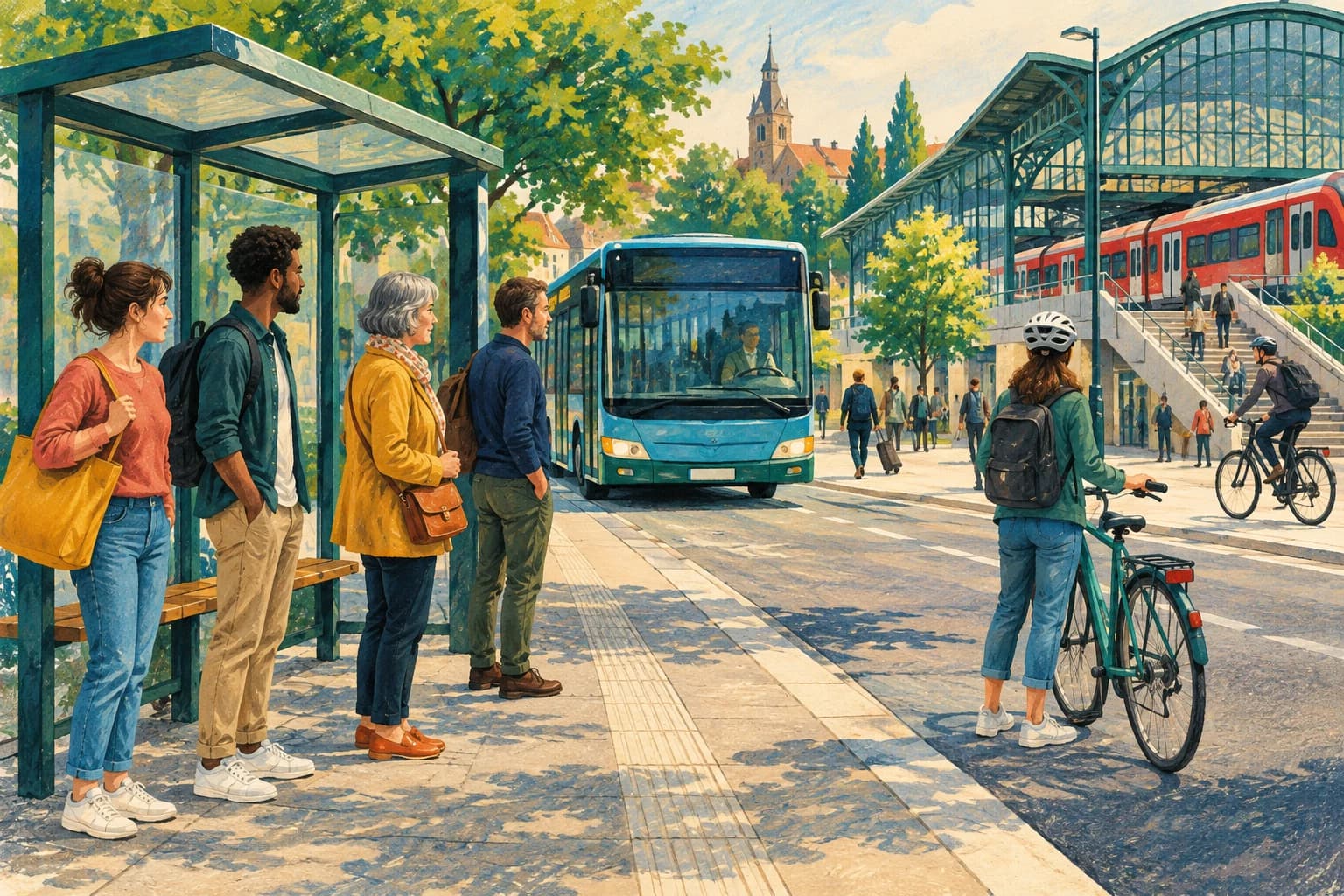
Choose your transport
Mit means with or by. These prepositions use the dative: der Bus becomes dem Bus, das Auto becomes dem Auto and die Bahn becomes der Bahn.
Ich fahre mit dem Bus.
I travel by bus.
Mara fährt mit der Bahn.
Mara travels by train.
Ben fährt mit dem Fahrrad.
Ben travels by bicycle.
Wir fahren mit dem Auto.
We travel by car.
Say mit dem Bus, mit dem Zug, mit dem Fahrrad and mit dem Auto. Die Bahn refers to rail transport.

02
Come out of a place
Aus means out of or from. It uses the same dative articles: aus dem Bus and aus der Schule. Von means from a person, place or starting point; von dem often becomes vom.
Ich komme aus dem Bus.
I am coming out of the bus.
Mara kommt aus der Schule.
Mara is coming out of the school.
Ben kommt vom Bahnhof.
Ben is coming from the station.
Wir kommen aus Berlin.
We come from Berlin.
Ich komme aus Berlin names your origin. Ich komme vom Bahnhof names a starting point. Learn these phrases with their prepositions.

03
Stay with someone
Bei means at or with, often for a person or their home. Bei dem becomes beim. Compare beim Freund with vom Freund: at a friend’s place versus from a friend’s place.
Ich bin bei dem Freund.
I am at the male friend’s place.
Mara ist bei der Freundin.
Mara is at the female friend’s place.
Ben kommt von der Freundin.
Ben is coming from the female friend’s place.
Wir fahren mit dem Zug.
We travel by train.
All four prepositions in this chapter take the dative: mit, aus, bei and von. Here der Freund becomes dem Freund and die Freundin becomes der Freundin.
Ready to try it?
Check what you remember with 12 short questions.
Loading quiz…