A2-1 · Remembering with the Perfekt
Childhood memories
Talk about childhood games, favourite toys and days out using common irregular participles.
About 5 minutes to read · 12 quiz questions
01
An afternoon in the past
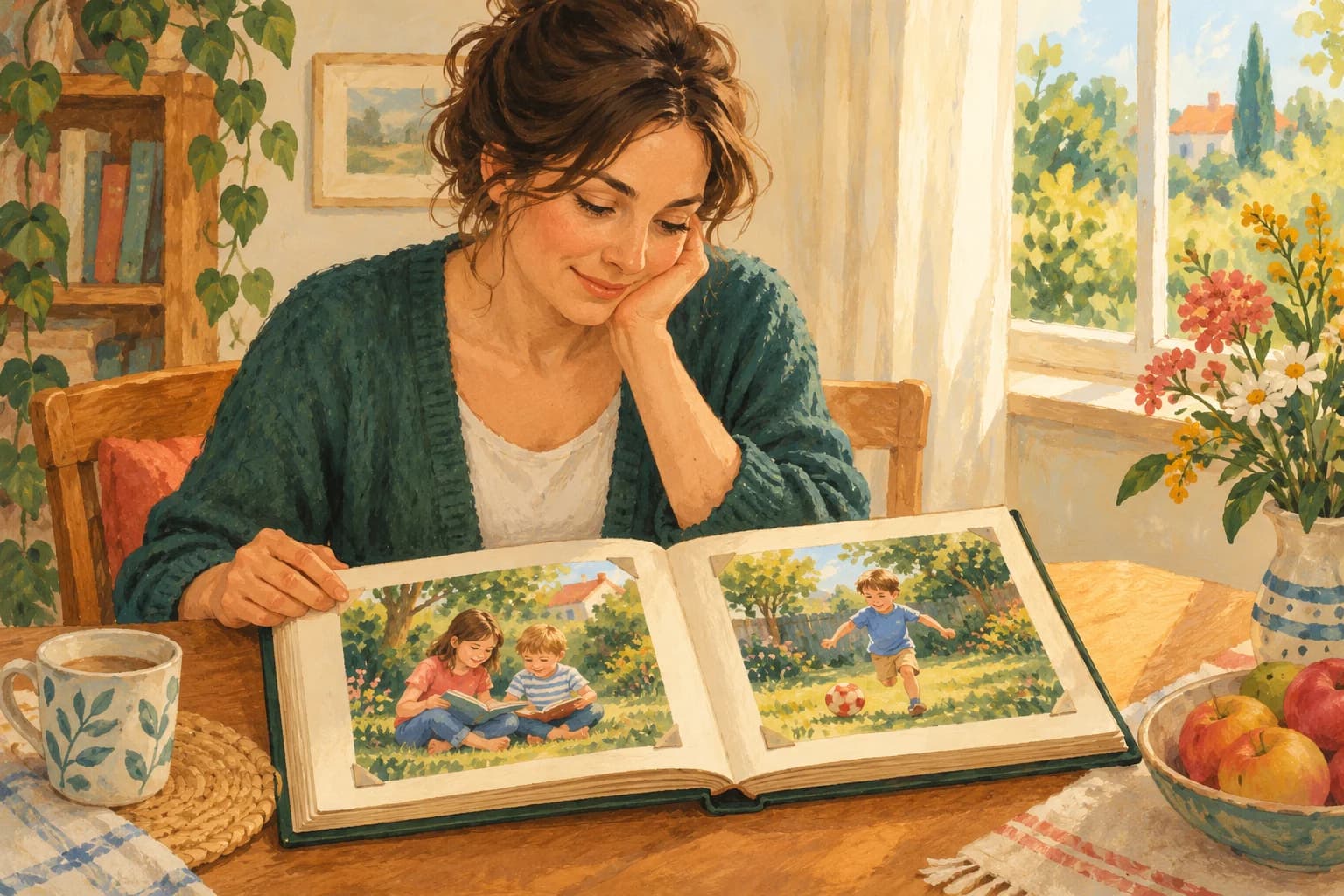
Mia remembers the afternoons she spent with her brother. The Perfekt tells us what happened. Some participles change their vowel and end in -en instead of -t.
Ich habe als Kind viele Bücher gelesen.
As a child, I read lots of books.
Mein Bruder hat oft einen Ball geworfen.
My brother often threw a ball.
Wir haben im Garten gespielt.
We played in the garden.
Abends haben wir zusammen gegessen.
In the evenings, we ate together.
The helper verb haben changes with the person: ich habe, er hat, wir haben. The participle stays the same and usually goes at the end of the main clause.
02
Learn the whole participle
You cannot always build an irregular participle by adding ge- and -t. Learn the infinitive and participle together. The examples below use haben.
| Meaning | Infinitive | Participle |
|---|---|---|
| to read | lesen | gelesen |
| to see | sehen | gesehen |
| to sing | singen | gesungen |
| to write | schreiben | geschrieben |
| to find | finden | gefunden |
| to eat | essen | gegessen |
Ich habe ein Bild gesehen.
I saw a picture.
Wir haben ein Lied gesungen.
We sang a song.
Meine Schwester hat einen Brief geschrieben.
My sister wrote a letter.
Ich habe meinen Teddy gefunden.
I found my teddy bear.
Compare spielen → gespielt with lesen → gelesen. Verbs such as finden and singen change the vowel: gefunden, gesungen. Say each pair aloud.
03
Some memories use sein
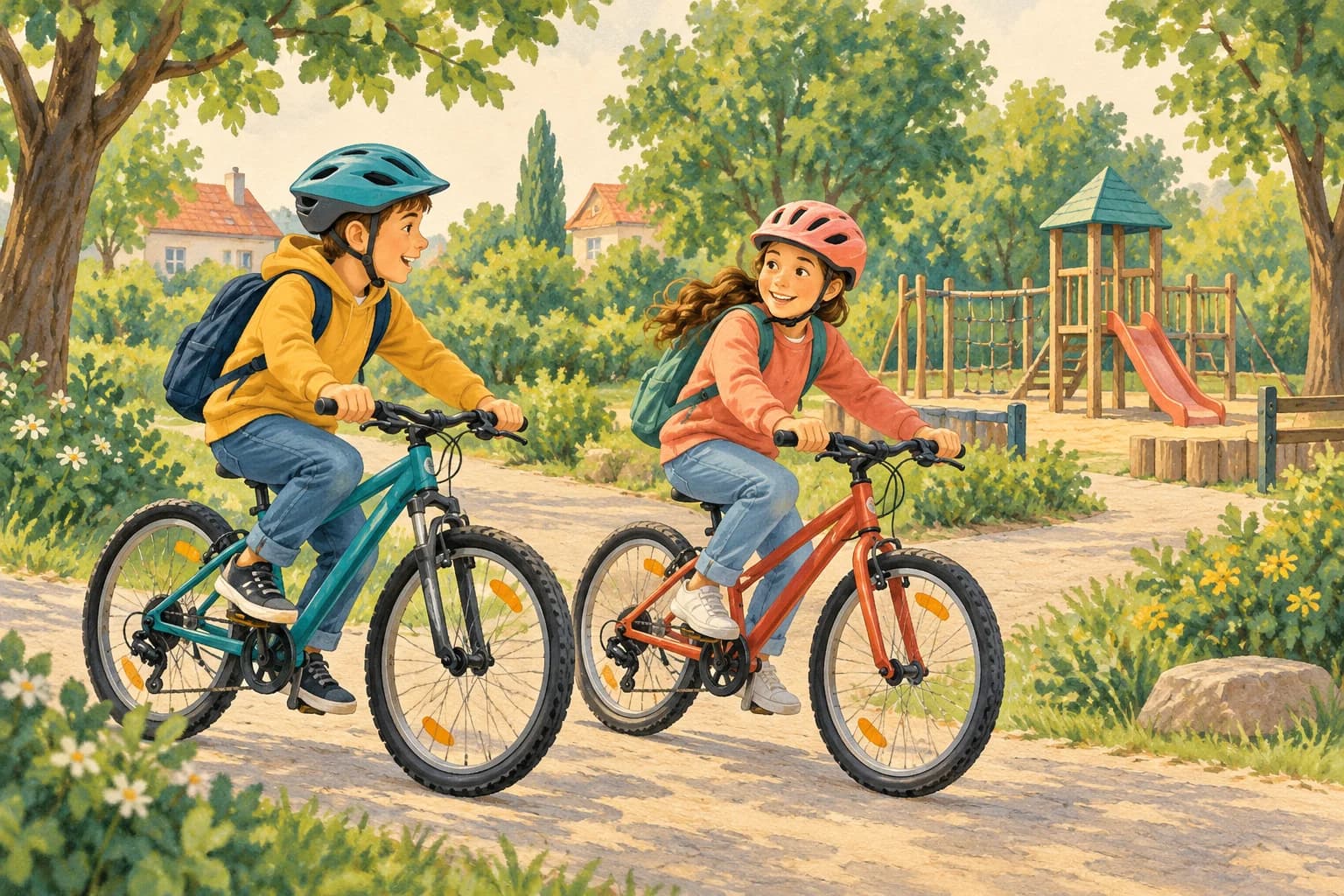
Use sein with these verbs when they describe movement to another place: gehen, kommen and fahren. Sein also goes with bleiben. Learn the helper with the participle.
Wir sind zum Spielplatz gegangen.
We went to the playground.
Ich bin mit dem Fahrrad zur Schule gefahren.
I cycled to school.
Meine Freundin ist zu uns gekommen.
My friend came to our home.
Am Sonntag sind wir zu Hause geblieben.
On Sunday, we stayed at home.
These examples describe movement or staying somewhere: bin gefahren, ist gekommen, sind gegangen, sind geblieben. Do not choose the helper only because a participle ends in -en: gelesen still uses haben.

04
Tell a short memory
Read Leo's memory. Notice the two helper verbs and the participles at the end. Then think of your own childhood: a toy, a game, a place and a person.
Ich habe meinen alten Ball gefunden.
I found my old ball.
Dann bin ich mit meinem Bruder zum Park gegangen.
Then I went to the park with my brother.
Wir haben dort Fußball gespielt und ein Eis gegessen.
We played football there and ate an ice cream.
Abends sind wir nach Hause gekommen.
In the evening, we came home.
A simple sequence is enough: Ich habe … gefunden. Dann bin ich … gegangen. Wir haben … gegessen. Keep the helper near the start and the participle at the end.
Ready to try it?
Check what you remember with 12 short questions.
Loading quiz…