A2-17 · Describe clothes after mit
Fashion
Use dative adjective endings to describe styles, materials and patterns in a fictional outfit session.
About 5 minutes to read · 12 quiz questions
01
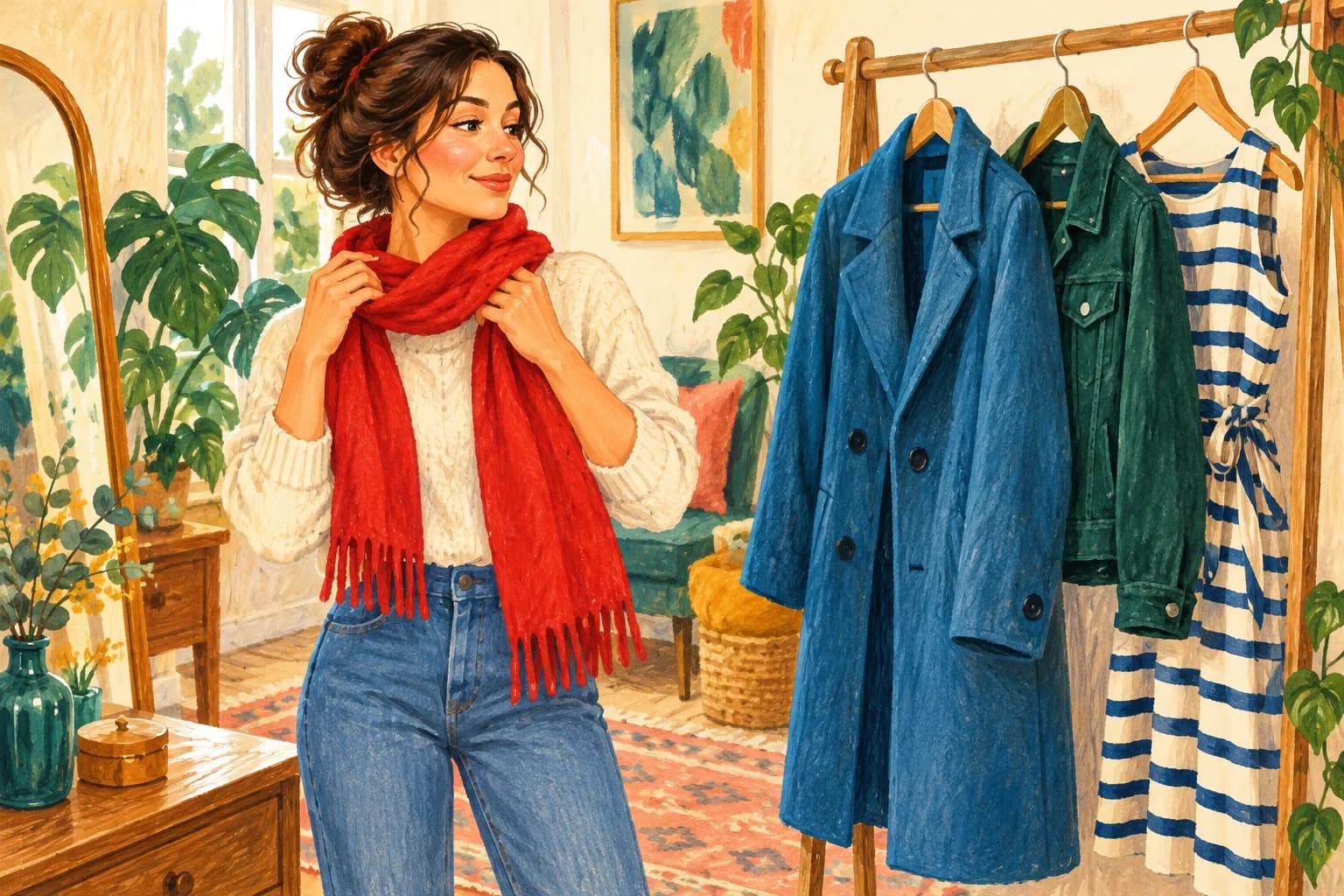
With the red scarf
In this fictional outfit session, Mira tries different combinations. Mit always takes the dative. After dem and der in the dative, the adjective ends in -en.
Mit dem roten Schal sieht Mira gut aus.
Mira looks good with the red scarf.
Mit der grünen Jacke ist das Outfit komplett.
The outfit is complete with the green jacket.
Mira kombiniert den Gürtel mit dem gestreiften Kleid.
Mira pairs the belt with the striped dress.
Mit den schwarzen Schuhen sieht das Outfit elegant aus.
The outfit looks elegant with the black shoes.
Der Schal becomes mit dem roten Schal. Die Jacke becomes mit der grünen Jacke. Das Kleid becomes mit dem gestreiften Kleid. Gestreift means striped.
02
With a new coat
Mira also tries clothes that have not been mentioned before. Use einem for masculine and neuter nouns, and einer for feminine nouns. The adjective still ends in -en.
Mira trägt den Schal mit einem blauen Mantel.
Mira wears the scarf with a blue coat.
Mit einer karierten Hose wirkt das Outfit sportlich.
The outfit looks sporty with a checked pair of trousers.
Mira trägt die Hose mit einem weißen Hemd.
Mira wears the trousers with a white shirt.
Der Pullover ist aus weicher Wolle.
The jumper is made of soft wool.
Compare mit dem blauen Mantel and mit einem blauen Mantel. The article changes, but blauen keeps -en. Wolle means wool, and Baumwolle means cotton.
03
Without an article
Aus also takes the dative. Without an article, the adjective carries the case ending itself. Use -em with masculine and neuter singular nouns and -er with feminine singular nouns.
Das Hemd ist aus dünner Baumwolle.
The shirt is made of thin cotton.
Die Tasche ist aus braunem Leder.
The bag is made of brown leather.
Mit schwarzen Stiefeln wirkt das Outfit anders.
The outfit looks different with black boots.
Mira trägt eine Jacke aus weichem Stoff.
Mira wears a jacket made of soft fabric.
Aus weicher Wolle has no article, so weich takes -er. Compare aus der weichen Wolle, where der carries the case and the adjective takes -en. With no article in the dative plural, use -en.
Ready to try it?
Check what you remember with 12 short questions.
Loading quiz…