Absolute Beginner - 32 Videos with Interactive Subtitles
Easy German - Basic Conversation Phrases 1This video is part of Easy Languages, a non-profit project that helps people learn languages through authentic street interviews while showcasing street culture to present more diverse images of countries. Episodes are produced in local languages and include subtitles in both the original language and in English. The series is produced by the intercultural youth media network The Global Experience. Translations: Ukrainian & Russian — Yevhenii Zelenskyi; Chinese — NYX.
Easy German - Basic Conversation Phrases 2This video aims to help you learn some German. Easy Languages is a non-profit project that teaches languages through authentic street interviews and showcases street culture to present more diverse images of countries; episodes are in local languages with subtitles in the original language and in English.
Introduce yourself in Slow German | Super Easy German (1)Super Easy German is a new beginner-targeted series that uses street interviews like the main Easy German show but with slow speech, short sentences, and simple vocabulary. New episodes will appear weekly on Wednesdays. It’s produced in cooperation with The Global Experience as part of the Easy Languages project, which creates authentic street-interview videos with subtitles. Hosts for this episode are Walt Hampton and Carina Schmid; camera and editing by Janusz Hamerski and Carina Schmid, with translations by Ben Eve and NYX.
The Weather | Super Easy German (14)This Easy Languages / Easy German episode, produced in cooperation with The Global Experience, helps learners by presenting authentic street interviews in local languages with subtitles. It’s hosted by Carina Schmid, with camera and editing by Janusz Hamerski (and Carina Schmid) and translation by Ben Eve. The video includes images of Lima and Cape Town.
Grocery shopping in German | Super Easy German (33)This video was re-uploaded after correcting a mistake. Produced by Easy Languages in cooperation with The Global Experience, the episode uses authentic street interviews with subtitles to help people learn languages and showcase street culture. Host: Carina Schmid; camera and editing: Janusz Hamerski (editing also by Carina Schmid); translation by Ben Eve.
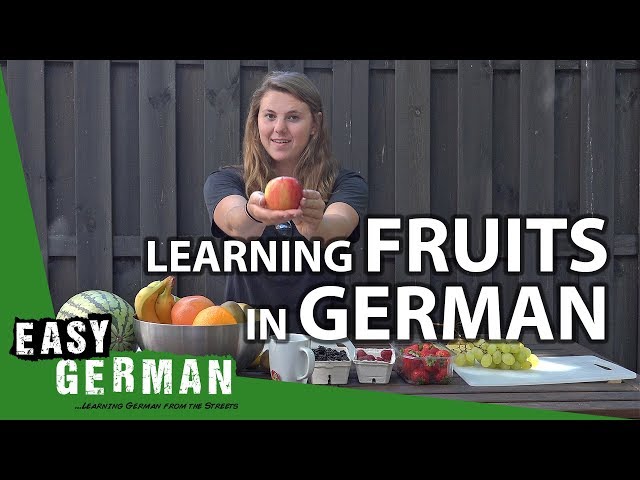
Learning Fruits in German | Super Easy German (45)This episode, hosted by Carina Schmid and produced in cooperation with The Global Experience, is part of the Easy Languages project, which helps people learn languages through authentic street interviews and showcases street culture. Episodes are filmed in the local language and include subtitles in both the original language and English. Credits: camera and editing by Janusz Hamerski (editing also by Carina Schmid) and translation by Ben Eve.
Hoch, höher am höchsten! | Super Easy German (63)This episode, hosted by Carina Schmid and produced in cooperation with The Global Experience, is part of the Easy Languages project that helps people learn languages through authentic street interviews and showcases local street culture. Episodes are filmed in the local language and include subtitles in both the original language and English. Camera: Janusz Hamerski; Editing: Janusz Hamerski & Carina Schmid; Translation: Ben Eve.
Introduce yourself in German (for absolute beginners) | Super Easy German (76)This Easy Languages episode, produced in cooperation with The Global Experience, supports language learners through authentic street interviews filmed in local languages with subtitles in both the original language and English. The episode is hosted by Carina Schmid, shot by Janusz Hamerski, and edited by Janusz Hamerski and Carina Schmid. Translations: English by Ben Eve; Ukrainian by Zhanna Lazarieva; Russian by Yevhenii Zelenskyi; Chinese by NYX.
Conjugation of regular verbs: Sagen, Machen, Hören | Super Easy German (83)This episode was produced in cooperation with Easy Languages, a project that helps people learn languages through authentic street interviews and showcases local street culture; episodes are filmed in local languages with subtitles in the original language and in English. The episode is hosted by Carina Schmid, shot and edited by Janusz Hamerski (with Carina Schmid), translated by Ben Eve, and features Ukrainian and Russian translations by Yevhenii Zelenskyi.
How to order Coffee in Germany? | Super Easy German (99)This episode is produced with Easy Languages, an international project that helps people learn languages through authentic street interviews and showcases local street culture. Episodes are filmed in the local language and include subtitles in both the original language and English. Host: Carina Schmid; camera: Francisco A. Soza; edit: Janusz Hamerski and Carina Schmid; translation: Ben Eve.
Online Deutsch lernen / A1.1 Anfänger / sich vorstellen / das Alphabet / die Zahlen / AusspracheKurzvideo für Deutschlernende (A1, Anfänger) aus dem Lehrwerk Hallo A1.1 der Hallo Deutschschule Zürich. Es behandelt Grundwortschatz und Themen wie sich selbst und andere vorstellen, das Alphabet, die Zahlen 0–100, Angaben zur Person, Personalien, Singularkonjugation und wichtige Verben. Das Format: ca. 15 Minuten mit Hören, Nachsprechen und Dialogen.
How to order drinks in German | Super Easy German (109)This episode was produced with Easy Languages, an international project that helps people learn languages through authentic street interviews and showcases local street culture; episodes include subtitles in the original language and in English. Host: Maria Wallis. Camera: Francisco A. Soza. Edit: Carina Schmid. Translation: Jeremy.
Deutsch lernen mit Dialogen / Lektion 20 / kein oder nicht / Verben konjugieren / SatzstellungIn diesem Video lernst du Grammatikthemen wie kein vs. nicht, Akkusativ, Personalpronomen, Verbkonjugation, Satzbau bei Modalverben sowie Wortschatz zum Wetter, Gefühlen, Hobbys, Verneinungen, Verboten und Nachfragen. Die Transkription bietet strukturierte Abschnitte mit Beispielen und Dialogen zu „deshalb“, Ja-/Nein‑Fragen, Gefühls‑ und Geschmacksangaben, Wetterbeschreibungen sowie zahlreichen Übungssätzen zu Modalverben (Verboten und Pflichten). Ideal zum Nachsprechen und Wiederholen der wichtigsten Alltagssituationen.
How to learn the German Plural endings | Super Easy German (127)This Easy Languages / Easy German episode uses authentic street interviews to help learners practice German. It’s hosted by Carina Schmid with guest Danielle Tobey. Camera: Jeremy Smith; edit: Carina Schmid; translation: Ben Eve.
What Germans Buy at the Supermarket | Easy German 362This Easy Languages / Easy German episode uses authentic street interviews, with subtitles in the original language and English, to help people learn languages and expose local street culture. The episode was produced in cooperation with Easy Languages. Host: Manuel Salmann; Camera: Carina Schmid; Edit: Manuel Salmann; Translation: Ben Eve.
Counting in German from 1 - 100 | Super Easy German 178This episode introduces German numbers and counting from one to one hundred, showing how you encounter numbers in everyday life and explaining how they work differently in German. It’s produced by Easy Languages to help learners through authentic street interviews, with episodes in local languages and subtitles in both the original language and English. Hosts: Janusz Hamerski and Carina Schmid; Camera & edit: Chris Thornberry; Translation: Ben Eve.
Imperatives: How to Phrase Orders and Requests in German | Super Easy German 180This video teaches the German imperative—how to form this verb form used for demands, requests and orders—and introduces the most common regular and irregular imperative forms. It’s produced by Easy Languages, a project that helps people learn languages through authentic street interviews. Hosts for this episode are Janusz Hamerski and Carina Schmid; camera/edit by Chris Thornberry and translation by Ben Eve.
How to Tell the Time in German | Super Easy German 183This Easy German episode explains how Germans name clock times and clears up confusing expressions (like "quarter to six" vs. "three quarters of six"), highlighting regional differences in everyday usage. Hosts Janusz Hamerski and Carina (Cari) Schmid guide learners through the common variations so you can understand real-life German time expressions. The video is produced by Easy Languages, a project that helps people learn languages through authentic street interviews.
100 Words You Should Know When Coming to Germany | Super Easy German 203This video teaches the 100 most common everyday German words and phrases to help travelers communicate in situations like train stations, restaurants and small talk. It’s organized into sections such as greetings, feelings, prices & payments, orientation & transport, restaurants, accommodation and small talk. Produced by Easy Languages, the episode is hosted by Carina Schmid, Manuel Salmann and Erik Stahlhacke, with camera/editing by Chris Thornberry and translation by Ben Eve.
Possessive Pronouns in German | Super Easy German 223This Easy German video explains German possessive pronouns—how they differ (e.g., "mein Apfel" vs. "meine Birne"), why their endings change, and how they vary with different persons (du, wir, etc.)—with practice examples and a summary. A correction notes that at 6:37 the line should be "Das ist sein Hund" = "This is HIS dog." Produced by Easy Languages; hosts Janusz Hamerski and Carina Schmid; camera/edit by Chris Thornberry; translation by Ben Eve.
How to Remember Possessive Article Endings | Super Easy German 225This Easy German episode continues a lesson on possessive articles, showing step by step how to form them in the dative, accusative and genitive cases and giving tips to remember the endings. It briefly reviews the nominative, offers practice prompts (write a funny sentence in each case in the comments), and includes chapter timestamps and production credits.
Our Morning Routine in Slow German | Super Easy German 232This Easy German episode follows Cari and Janusz as they show their morning routines. Speaking extra slowly, they reveal when they wake up, what they eat for breakfast, when they head to work, and include a scene of Janusz showering. Viewers are invited to share their own morning routines in the comments.
Having Breakfast in Slow German | Super Easy German 233This Easy German video, spoken slowly, shows Cari (Carina Schmid) and Janusz Hamerski demonstrating a typical German breakfast while teaching important vocabulary and explaining aspects of German food culture. Produced by Easy Languages; camera/edit by Chris Thornberry and translation by Ben Eve.
Ordering in a Restaurant in Slow German | Super Easy German 236Easy German takes you to a restaurant, where Cari, Janusz and Esthi teach the essential vocabulary and phrases for eating out, all spoken in very slow German. The episode is produced by Easy Languages (based in Berlin). Hosts: Janusz Hamerski, Carina Schmid and Esther Mettler; camera/edit: Chris Thornberry; translation: Ben Eve.
Our Daily Chores in Slow German | Super Easy German 249In this episode Cari and Janusz share household chores—taking out the trash, making the bed, vacuuming—and viewers learn key vocabulary related to doing chores. The video is spoken slowly in German to make it easier for learners to follow. Hosts: Janusz Hamerski and Carina Schmid; produced by Easy Languages.
German Alphabet & Pronunciation - Full Guide | Super Easy German 253This episode introduces the German alphabet: Carina and Erik present every letter with correct pronunciation, including special letters (the umlauts Ä/Ö/Ü and the Eszett ß) and the two main pronunciations of "R." It also covers common diphthongs and includes chapter timestamps for each letter and topic, making it especially useful for beginners and still informative for advanced learners. Hosts: Carina Schmid and Erik Stahlhacke.
Typical German Dinner in Slow German | Super Easy German 254In this episode Cari and Janusz present a typical German evening meal in slow German, explaining the tradition of "Abendbrot" (bread eaten for dinner). They show common foods like sausage, cheese, vegetables and salad, making it easy for learners to follow. The video is produced by Easy Languages; hosts are Janusz Hamerski and Carina Schmid.
Introduce Yourself in Slow German | Super Easy German 258This Easy German episode shows how to introduce yourself in German — very simply, slowly and with lots of repetition — by asking team members and friends common personal questions. It covers name, age, where you’re from and live, relationships and family, education and profession, hobbies and sports, favorite food and dislikes, pets, music and languages. Hosts: Janusz Hamerski and Carina Schmid; produced by Easy Languages.
Emotions in Slow German | Super Easy German 263In this episode Cari and Janusz teach, slowly and clearly, how to talk about emotions in German. They introduce and explain many mood adjectives (e.g., nervös, glücklich, ängstlich, enttäuscht, zufrieden, stolz, traurig, peinlich, genervt, gelangweilt, mutig) and share personal examples of situations when they felt these emotions. Hosts: Janusz Hamerski and Carina Schmid; produced by Easy Languages.
Our Lunch Break in Slow German | Super Easy German 265Cari and Janusz show how they spend their lunch break in this episode, spoken in slow German. Join them for a meal in a restaurant and learn useful vocabulary and sentences related to taking a lunch break. Produced by Easy Languages; hosts Janusz Hamerski and Carina Schmid, camera & edit by Chris Thornberry, translation by Ben Eve.
Winter in Berlin in Slow German | Super Easy German 273In this episode the hosts explore wintry Berlin in slow German, taking viewers to Mauerpark for a snowball fight, snowman building and sledging. You'll learn lots of useful vocabulary for talking about winter.
Learn Basic German Greetings & Farewells in Slow German | Super Easy German 274This Easy Languages video introduces the most important German greetings and farewells and demonstrates how to use them in short phone calls. It focuses on the most commonly used expressions and finishes with a few interesting regional phrases. Produced by Easy Languages; hosts Janusz Hamerski and Carina Schmid (camera: Rawad Sabbagh; edit: Chris Thornberry; translation: Ben Eve).